Technical analysis / Water-well screens
Well Screen Slot Size: Send the Formation Data First
Quick answer
Where the approved well design uses a screen, base the quotation on the formation data and completion design, not the rig’s depth class. Send the relevant sample and sieve-analysis records, identify any proposed filter pack, and request a screen schedule approved by the responsible well professional. Ask suppliers to price that schedule and identify missing inputs; this article supplies no universal slot size.
Why the screen enquiry starts with the formation
Published 28 October 2026. This is technical procurement analysis of earlier sources, not a new rule or product announcement. Alberta’s Design and Construction of Water Wells was published online on 28 May 2001 and reviewed/revised on 23 April 2018. Its intake-design discussion links screen openings to the particle sizes of the producing aquifer, and its artificial-pack discussion links the pack material with the screen openings. These are technical background points, not current rules for buyers outside that jurisdiction. [1]
Thom Hanna’s Water Well Journal column, published 19 March 2024, distinguishes naturally developed and artificially filter-packed completions and explains the role of formation-sample sieve analysis in slot and pack selection. It also stresses how the sample was collected and how representative it is. Its stated context is a typical completion in an unconsolidated formation. [2]
Attach identifiable evidence rather than an isolated number
RigSpan’s procurement recommendation is to send the formation log and the available sample-analysis report with the enquiry. Identify the borehole, sample references, depth intervals, collection method and known limitations. Ask the responsible well professional whether those records support the intended screened interval or whether further information is required.
Keep the original report and its revision visible. If the buyer has only a photograph of cuttings or a verbal ground description, mark the analysis as missing rather than asking a supplier to turn that description into a firm slot-size decision. A laboratory or specialist review should have an explicit scope and responsible party.
Keep screen-slot width distinct from screen diameter, casing dimensions, drilled-hole diameter and planned depth. The depth and borehole-diameter guide addresses the wider dimensional brief; it does not replace the formation information needed for the completion design.
Five attachments for a comparable screen offer
This original purchasing schedule helps bidders quote the same proposed completion. It does not select a screen opening, filter-pack grading, screen interval or material for your site.
| Attachment | Buyer supplies | Written confirmation requested |
|---|---|---|
| Formation evidence | Formation log, identified samples, sieve-analysis report and limitations | Documents used for the proposal and any missing information |
| Completion basis | Approved arrangement and filter-pack specification where applicable | Design reference followed; unresolved pack/screen matching questions |
| Screen schedule | Approved sections, openings, dimensions, material and quantities | Itemised offered configuration with drawing/revision references |
| Connections and supply boundary | Casing interfaces, end fittings and installation responsibilities | Included items, compatibility owner and explicit exclusions |
| Handover evidence | Order-specific documentation and receiving requirements | Identification, accepted records, packing list and open actions |
Confirm the completion basis before ordering the screen
Ask the responsible well professional to identify whether the proposed completion relies on natural development or an artificial filter pack, where a screen is required. If a pack is proposed, attach its accepted material and grading specification with the screen enquiry and request confirmation that the offer follows the approved design.
The two source discussions link opening and particle-size decisions; they do not justify copying a slot or retention percentage from another well. [1] [2] If the formation evidence, pack proposal or screened interval changes, request a revised design and supplier response before accepting a substitution.
This article does not assume that every water well needs a screen or an artificial pack. Ask the project’s well professional to establish the applicable completion arrangement for the actual aquifer and construction method.
Ask for a screen schedule and a clear supply boundary
Request an approved schedule identifying the screen sections, slot specification, dimensions, material, lengths, connections and quantities required by the design. Ask the supplier to return an itemised offer with drawing references and any unresolved design inputs. Obtain an explicit response for end fittings, adapters, caps and other specified items rather than assuming they accompany a screen length.
Keep drilling equipment and completion materials identifiable in the purchase. A rig quotation or a photograph of casing beside a machine does not establish that the required screen, filter pack or installation services are included. Ask who supplies each item, who checks compatibility and who approves changes to the accepted schedule.
Agree the documents needed at handover: accepted drawings, product identification, material or inspection records required by the order, packing list and open questions. These are RigSpan’s purchasing recommendations, not a claim that every supplier provides the same certification or that a particular screen guarantees sand-free or potable water.
Connect the completion schedule to the drilling brief
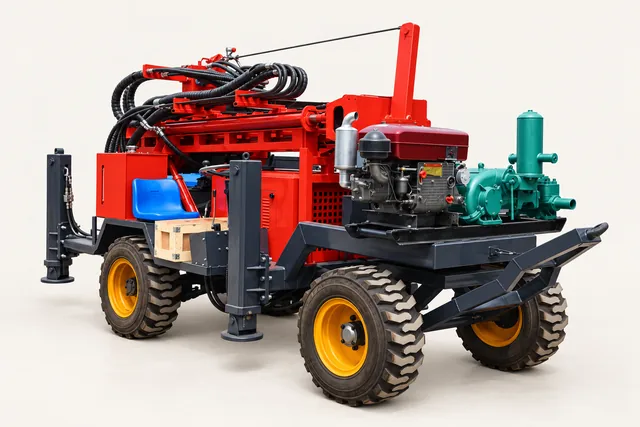
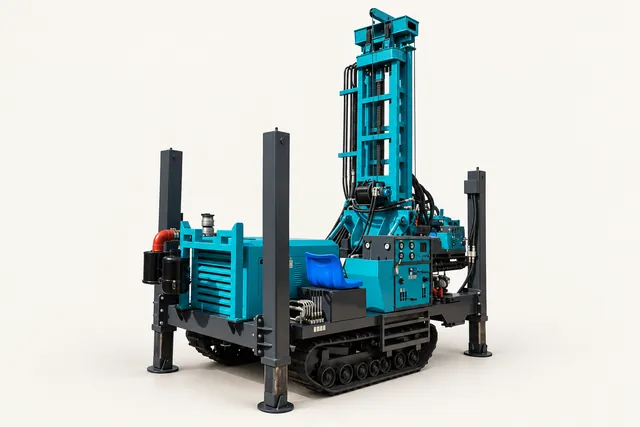
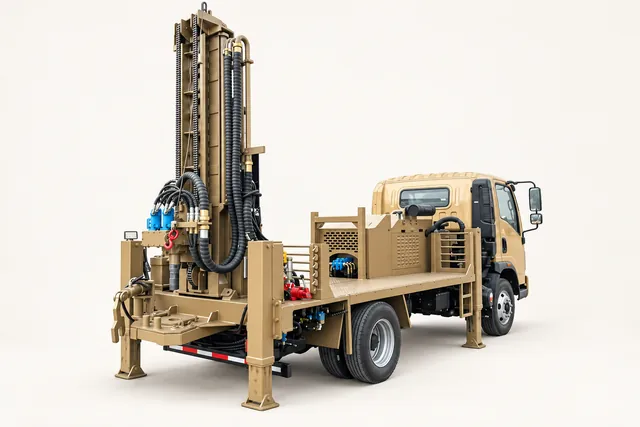
The 200 m trailer, 400 m crawler and 600 m truck-mounted configurations below are catalogue routes for discussing drilling equipment. They do not establish an included screen package, filter pack, screen-manufacturer appointment or a guaranteed well result. Request the actual rig and tooling offer against the approved hole and completion programme.
Use the water-well enquiry checklist and water-well equipment package for the wider purchase. Keep well development and pumping-test equipment as separately defined scopes. Accepted references can be kept with the equipment records and worksheets from the download library.
RigSpan provides independent equipment sourcing and supplier coordination. The appointed project professionals establish the completion design and acceptance requirements. The cited government page and journal do not approve these catalogue configurations or imply a commercial relationship.
Buyer questions.
Can a 200 m or 400 m rig label determine the well-screen slot size?
No. The rig label does not provide formation grain-size data or the completion design. Request the relevant records and a project-specific screen schedule from the responsible well professional.
Does every well need an artificial gravel pack?
This article makes no such assumption. The well professional should establish the completion basis using the actual formation and construction information, then define any screen and filter-pack requirements together.
Sources and scope.
External sources support the background points attributed to them. The enquiry questions, checklists and procurement implications are RigSpan editorial guidance. References to other manufacturers do not imply a commercial relationship, endorsement or performance equivalence.
Continue the equipment discussion.
Turn the requirements into a clear enquiry.
Share your project information with RigSpan for equipment sourcing and supply coordination.