Procurement guide / Water Well Rigs
Drilling Air Compressor Requirements: What to Put in an RFQ
Quick answer
Specify the exact hammer and intended drilling conditions, then request delivered air flow at the required working pressure. A rig depth label or engine power rating alone cannot define a suitable compressor.
Start with the whole drilling system
A compressor enquiry should describe the work the air system must support, rather than begin with a preferred engine size. Atlas Copco presents its drilling compressor range in terms of pressure and flow; Rockmore publishes model-specific DTH tool documentation. These are useful starting points for asking suppliers to explain a matched package.
RigSpan recommends attaching the proposed hammer data sheet, hole schedule and rig configuration to the same enquiry. Ask the supplier to identify every assumption used in its recommendation. If the hammer has not been selected, ask for a provisional combination and an explicit list of information needed to confirm it. Keep the proposal provisional until those questions are resolved.
Build a requirements schedule
Use one schedule for every quotation so that differing units, conditions and package boundaries remain visible. The fields below are procurement questions, not a compressor sizing formula.
| RFQ field | Information to supply | Written response to request |
|---|---|---|
| Hole programme | Depth, diameter stages, water conditions and ground log | Assumptions used for the proposed combination |
| DTH tooling | Exact hammer model and bit configuration | Model-specific pressure and consumption data |
| Pressure and air flow | Required duty and measurement units | Delivered flow at the stated pressure and conditions |
| Location | Altitude, temperature, fuel and access | Applicable limitations and service requirements |
| Package | Rig, hoses, couplings and accessories | Included items, interfaces and exclusions |
Compare delivered performance and package boundaries
Ask whether the stated air volume is free air delivery and which reference conditions apply. Record pressure and flow together rather than copying the largest number from separate parts of a brochure. Request the offered model, control arrangement and the supplier’s statement of its suitability for your ambient temperature and altitude.
List hoses, couplings, lubricator, filtration or treatment equipment, fittings and any receiver separately. Have the responsible supplier confirm ratings and interface compatibility. Ask who supplies the connection between compressor and drill string; a quotation that includes a compressor may still exclude the accessories needed to connect it.
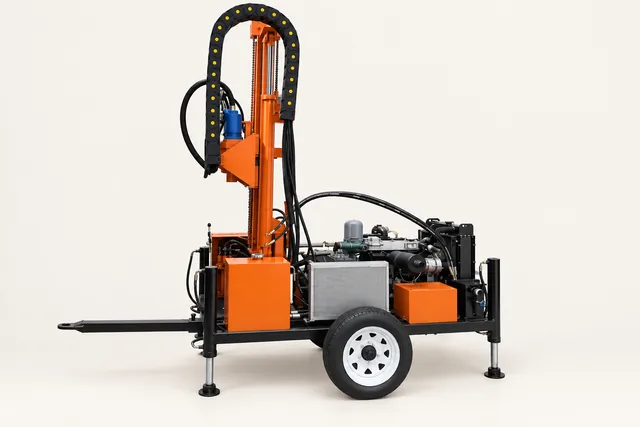
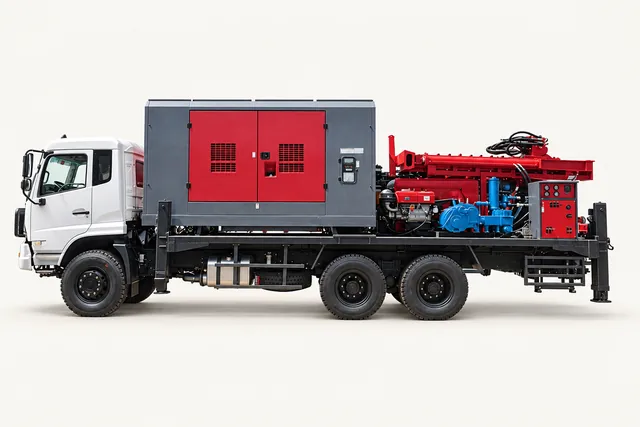
For a trailer or truck package, request a transport layout showing the compressor, rig, rods and tools. Confirm shipping dimensions, weights and handling points for the actual offer. Discuss fuel availability, service access and replacement consumables before comparing total package prices.
Ask for a written matching statement
Request the compressor technical sheet and the hammer air-consumption information used for the proposal. Ask for a written statement identifying the intended operating conditions, connection scope, exclusions and unresolved assumptions. A short demonstration video can support a discussion, but it does not prove performance at your borehole depth or in your ground.
When reviewing revised offers, give each configuration a revision number. If the hammer, hole diameter or working pressure changes, return the matching schedule to both suppliers. Do not carry forward an earlier compressor approval without checking what the change affects.
Use the enquiry worksheet.
Download an editable text checklist to record supplier responses, document references and unresolved questions.
Download Checklist ↓Buyer questions.
Can I select a compressor from a 300 m rig label?
No. That label does not specify the hammer, hole geometry, water conditions or the delivered air required for the proposed drilling system.
Is more engine power enough to compare two compressors?
No. Compare pressure and delivered air flow on the same stated basis, then review the actual package and site limitations.
Sources and scope.
External sources support the background points attributed to them. The enquiry questions, checklists and procurement implications are RigSpan editorial guidance. References to other manufacturers do not imply a commercial relationship, endorsement or performance equivalence.
Continue the equipment discussion.
Turn the requirements into a clear enquiry.
Share your project information with RigSpan for equipment sourcing and supply coordination.