Technical analysis / Water well procurement
Borehole Pumping Tests: What a Rig Quote Should Include
Quick answer
Ask for a separate test-pumping schedule: identify the proposed pump and power supply, measurement equipment, records, responsible test team and exclusions. A drilling rig quotation or depth label alone does not establish that testing is included or that a completed borehole will deliver the required water supply.
Why testing needs its own quotation line
This analysis uses earlier guidance, not a new tender or regulation. ICRC’s February 2011 manual identifies borehole water level and abstraction rate as essential pumping-test measurements. Its preparations chapter discusses monitoring equipment and the supporting pump, power and pipework. [1]
The RWSN library description of UNICEF’s 2018 drilling toolkit distinguishes terms of reference for drilling works from pump supply and installation. This source supports defining responsibilities; it is not a universal specification for every project. [2]
For an equipment buyer, the practical question is whether the offer contains a drilling package, a testing package, field services, or some combination. Ask each bidder to mark those boundaries in writing before comparing totals.
Separate the rig, temporary test equipment and services
Use three lines in the request for quotation. First, identify the drilling configuration and its circulation equipment. Second, request a separately itemised proposed test-equipment package if required. Third, state which field services and reporting responsibilities you are asking someone to perform. RigSpan’s recommendation is to keep these lines identifiable even if a single supplier offers all three.
A quotation line saying “pump included” is incomplete for this comparison. Ask the supplier to identify the pump and intended task. A mud-circulation pump in a drilling package must not silently become the proposed borehole test pump. Request the actual equipment description and written scope; the procurement team should not infer a substitute from a shared word.
Six questions to put beside the rig price
The following is an original purchasing checklist. It requests decisions and evidence; it does not prescribe a pumping-test procedure or an engineering acceptance standard.
| Scope line | Buyer question | Written response requested |
|---|---|---|
| Purpose and responsibility | Who approves the test brief and results? | Named responsible parties and agreed deliverables |
| Pump identity | What equipment is actually offered for testing? | Pump reference, intended task and configuration-specific documents |
| Power and connections | Which supporting items are supplied? | Itemised equipment, interfaces, buyer-supplied items and exclusions |
| Measurements | What will be recorded under the approved programme? | Equipment references and proposed record template |
| Field services | Who performs the work and supplies personnel? | Separate service scope and unresolved responsibilities |
| Handover | Which files and evidence must accompany the report? | File formats, review owner, equipment records and open issues |
Buy an identifiable record as well as equipment
Request the proposed reporting template before ordering services. Ask how the borehole identifier, equipment references, observations and supporting files will be connected, who will keep the original records, and who will review the report. Specify the editable-file and signed-report requirements with the responsible project team.
Keep the test method and interpretation with the appointed specialist. For a quotation comparison, record missing fields as unresolved and give each one an owner. Do not fill the gap with an assumed test duration, pumping rate, installation depth or yield target.
ICRC cautions that long-term sustainable yield depends on wider hydrogeological and operating conditions, and that an individual test belongs alongside background information and longer-term monitoring. [1] A purchase order should therefore distinguish delivery of an agreed test report from any separately stated performance commitment.
Relate the test scope to the drilling purchase
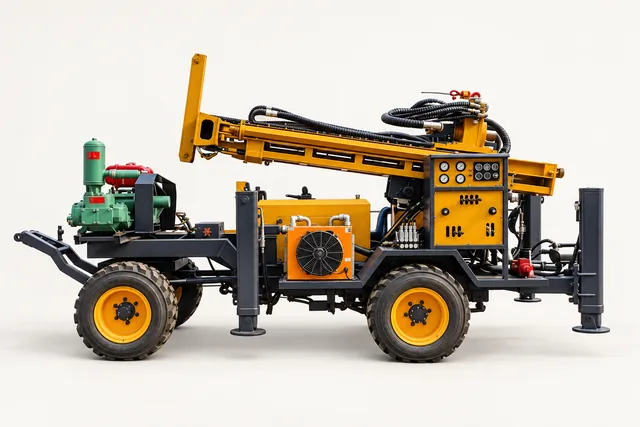
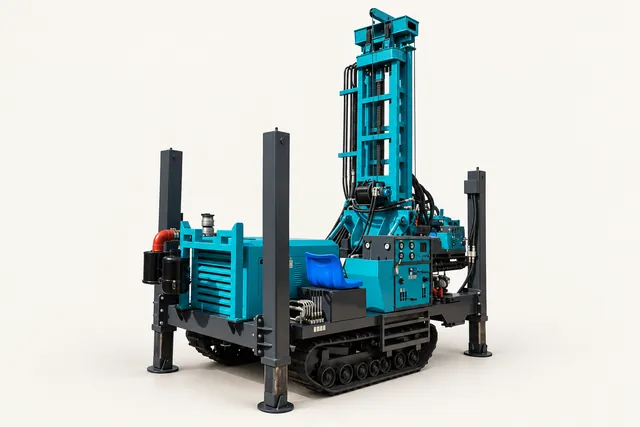
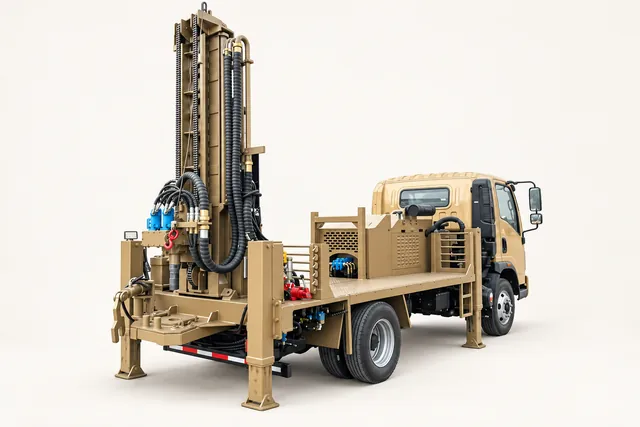
The 300 m trailer, 400 m crawler and 600 m truck-mounted catalogue configurations below are starting points for drilling-equipment discussions. Their names do not confirm an included test pump, monitoring package, field contractor or groundwater result. Request the exact offered drilling configuration and a separate response to the testing schedule.
Keep the broader brief in the water-well enquiry checklist and the water-well equipment package. For offer comparison, use the quotation comparison guide. Existing worksheets are available in the download library.
Agree who designs, performs and accepts the work
Before accepting the offer, ask the buyer, supplier and responsible project specialist to confirm which party approves the programme, provides equipment, performs fieldwork and accepts the records. Identify the handover point between each party. Equipment delivery and professional interpretation are different deliverables even when purchased together.
RigSpan provides independent equipment sourcing and supplier coordination. Test design, field testing, interpretation, permits, water-quality assessment and long-term monitoring need an explicit project-specific scope. This article sets no universal operating values, provides no water-supply guarantee and establishes no relationship with the cited organisations.
Buyer questions.
Does a drilling-rig quotation normally prove a pumping test is included?
No. Request an explicit equipment and service schedule. Identify the actual pump, supporting equipment, records and responsible team in the accepted offer.
Can the rig’s rated depth establish the completed well’s yield?
No. Keep drilling capability separate from the project-specific test programme, interpretation and water-supply requirements. Request the relevant evidence from the responsible specialist.
Sources and scope.
External sources support the background points attributed to them. The enquiry questions, checklists and procurement implications are RigSpan editorial guidance. References to other manufacturers do not imply a commercial relationship, endorsement or performance equivalence.
Continue the equipment discussion.
Turn the requirements into a clear enquiry.
Share your project information with RigSpan for equipment sourcing and supply coordination.