Direct driving or pre-drilling
Follow the project engineer’s approved method and trial evidence. An attachment option is not a foundation design decision.
Applications / Solar foundations
Start with the pile design and the ground investigation.
RigSpan application planning · Reviewed 17 October 2026
Select solar pile installation equipment using the approved pile drawing, required installation method, ground report and site access. Confirm the offered hammer or drilling attachment, working envelope and pile interface. Machine capability, foundation capacity and daily production are separate questions.
The questions below are RigSpan procurement guidance. Record unknowns as unresolved so the supplier can state the assumptions behind its proposal.
| Requirement | Your project information | What to confirm |
|---|---|---|
| Pile design | Pile section, dimensions, material, length and approved installation requirements | Confirm gripping / guiding arrangements and the offered attachment against the drawing. |
| Embedment and working space | Target embedment, exposed height, total pile length and overhead constraints | Reconcile these with the actual working envelope; do not interchange height and depth fields. |
| Subsurface information | Geotechnical report, hard layers, variability and available trial results | Have the project engineer define the installation method and refusal response. |
| Attachments | Required driving, drilling or other method and existing attachment references | Confirm model, interfaces, operating data, hose / adapter scope and inclusion status. |
| Terrain and access | Travel routes, working platform, clearances and transport constraints | Request the applicable operating limits; published gradeability is not permission to work on that slope. |
| Installation acceptance | Position / alignment requirements, test plan, records and inspection responsibilities | Separate machine checks from pile / ground performance and project acceptance. |
Follow the project engineer’s approved method and trial evidence. An attachment option is not a foundation design decision.
Compare total pile length, gripping / guiding arrangement and operating envelope; a listed drilling-depth field is not an allowable pile length.
Record the pile count, travel, positioning, ground variability and inspection duties before requesting a supplier estimate. No generic piles-per-day figure is implied.
DNV highlights how ground variability and pile refusal can disrupt installation. Its commentary also explains that pre-drilling changes the pile / soil condition and needs engineering consideration and representative testing. Ask the project engineer to define the accepted response before specifying an optional drilling attachment.
Reference: DNV — Sinking solar: managing subsurface risks during pile installation, 2022
DNV emphasises records linking installation, testing, refusals and remediation. For procurement, ask whether the proposed equipment offers the measurement or recording functions your project requires, and what additional survey or test equipment is needed. Do not assume a catalogue machine includes automatic positioning or test instrumentation.
Reference: DNV — Sinking solar: managing subsurface risks during pile installation, 2022
These are starting points for a supplier review, not a confirmed recommendation for every project. Open each product for its source-linked specifications, unresolved fields and configuration sheet.
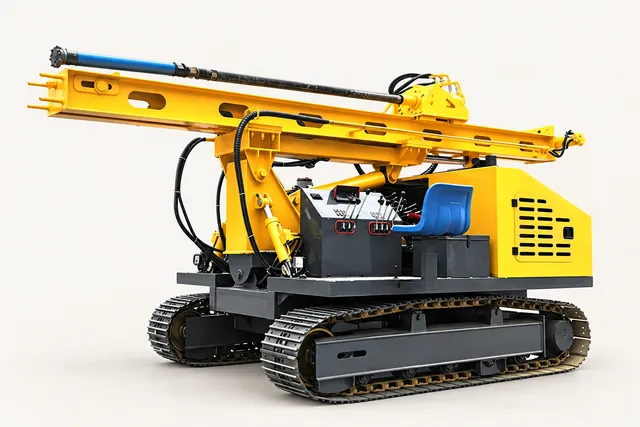
PV-15 has an invalid unit in the supplier engine field; that value is withheld on the product page pending clarification.
Review specifications and evidence →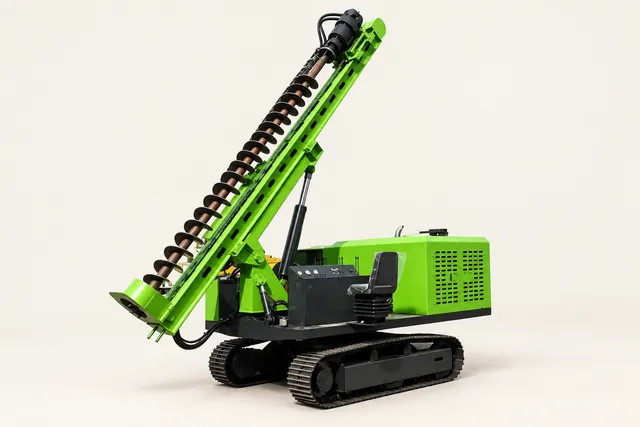
The PV-60 supplier uses combined drilling / piling depth and diameter labels. These do not establish pile handling limits; request the actual working envelope.
Review specifications and evidence →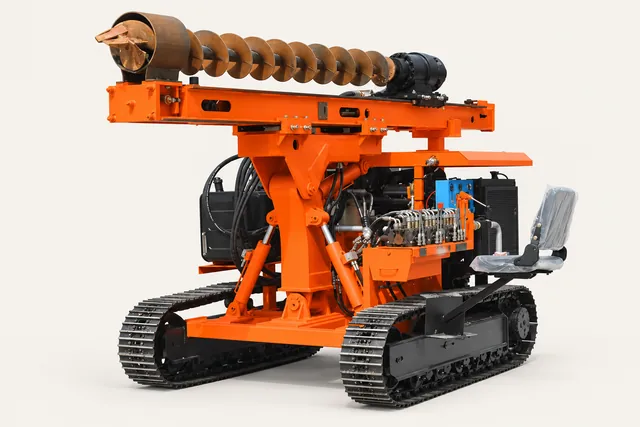
A quoted hammer or optional drilling attachment needs a model, interface and operating specification; the machine name alone does not identify the installed tool.
Review specifications and evidence →Separate the machine, tooling, auxiliaries, spares and delivery scope. Mark every line included, optional, excluded or unresolved.
No. The equipment rating describes a machine configuration. Foundation capacity depends on the designed pile, ground and installation conditions and the project testing and acceptance process.
That decision belongs to the project engineering and installation plan. DNV discusses risks from applying pre-drilling without appropriate design, testing and quality control. Confirm the method before ordering attachments.
Reviewed 17 October 2026. General references explain the planning considerations stated above. The supplier listings below support only their own catalogue configurations and are not independent tests. The project brief and comparison questions are RigSpan editorial guidance; final engineering and acceptance requirements remain project-specific.
RigSpan coordinates equipment sourcing with manufacturing partners. Send the brief and identify any existing equipment; request a written configuration and scope before ordering.