An existing compressor
Provide its model and delivery curve before selecting the hammer. A nominal pressure label is an incomplete match.
Applications / Quarry & mining
Match the rig, hammer and air supply to the hole programme.
RigSpan application planning · Reviewed 17 October 2026
For quarry and surface mining drilling, specify the required hole diameter, depth, inclination, rock information and bench access. Check the DTH rig, hammer, bit, rods and compressor as a compatible system, with a defined dust-control scope. Final drilling suitability requires a project-specific supplier proposal.
The questions below are RigSpan procurement guidance. Record unknowns as unresolved so the supplier can state the assumptions behind its proposal.
| Requirement | Your project information | What to confirm |
|---|---|---|
| Hole requirements | Required diameter, depth, inclination and hole count from the project plan | Confirm the offered machine and tooling cover the actual hole range. |
| Rock and site | Available rock description, fractures, water and bench / access information | Identify expected drilling constraints and the required working layout. |
| Hammer and bit | Hammer model, shank, bit size, rods and thread drawings | Reconcile bit / hammer / rod / rig interfaces and operating data. |
| Compressed air | Existing or proposed compressor model, pressure and delivered flow | Match the selected hammer and flushing duty, including the expected hole conditions. |
| Dust controls | Site dust-management requirements and proposed control method | Identify installed equipment, maintenance needs and which items are excluded. |
| Support scope | Tools, spare bits, hoses, manuals, transport and inspection requirements | Request quantities, part references and offer-specific documentation. |
Provide its model and delivery curve before selecting the hammer. A nominal pressure label is an incomplete match.
Request transport and working envelopes, positioning details and the supplier operating instructions for the proposed layout.
Supply the hole programme and conditions; require a stated basis for any production estimate rather than deriving output from a model name.
Epiroc describes compressor choice in relation to hammer size, hole depth and back pressure, and explains the role of air flow in clearing cuttings. Request the offered hammer manual and compressor delivery data together. Engine power or a pressure figure alone does not resolve the air-supply requirement.
Reference: Epiroc — Surface Drilling reference book, compressed air for drilling equipment, page 96
NIOSH describes wet or dry engineering controls, enclosed cabs and a dust-control programme as approaches to reducing drilling dust exposure. Ask which provisions the proposed configuration actually includes and how they are maintained. This general source does not certify any listed machine or establish compliance at your site.
Reference: NIOSH — Reducing Hazardous Dust Exposure When Rock Drilling During Construction, 2009-124
These are starting points for a supplier review, not a confirmed recommendation for every project. Open each product for its source-linked specifications, unresolved fields and configuration sheet.
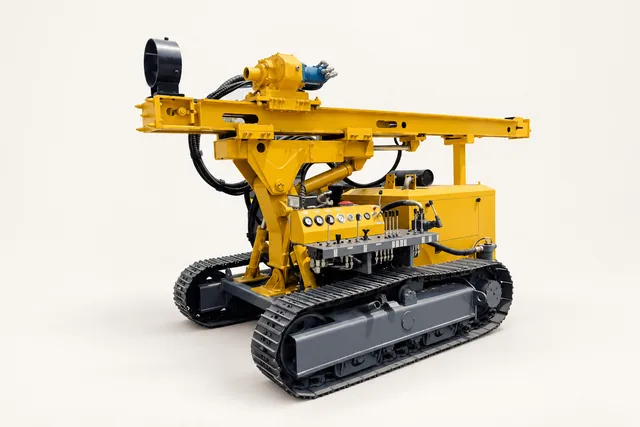
YQD115, YQD165 and YQD230 are catalogue configurations to compare, not an automatic smallest-to-largest selection rule.
Review specifications and evidence →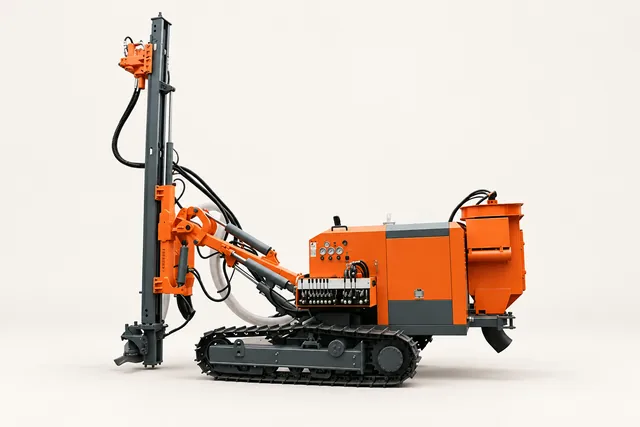
Use the source-linked product tables for listed hole and machine data, then obtain a current offer-specific configuration.
Review specifications and evidence →
Accessories and dust equipment shown or discussed in a listing must be separately confirmed in the bill of materials.
Review specifications and evidence →Separate the machine, tooling, auxiliaries, spares and delivery scope. Mark every line included, optional, excluded or unresolved.
Start with the actual offered hammer, hole programme and operating conditions. Ask the supplier to reconcile pressure, delivered flow, flushing demand and all connections. This page does not provide a universal compressor size.
The scope here is equipment selection for drilling holes. Hole requirements come from the project team. Explosives, charging and blast design are outside this equipment enquiry.
Reviewed 17 October 2026. General references explain the planning considerations stated above. The supplier listings below support only their own catalogue configurations and are not independent tests. The project brief and comparison questions are RigSpan editorial guidance; final engineering and acceptance requirements remain project-specific.
RigSpan coordinates equipment sourcing with manufacturing partners. Send the brief and identify any existing equipment; request a written configuration and scope before ordering.