Soil samples versus rock core
Identify the required sampler or barrel. Do not assume a light sampling configuration can deliver every rock-core programme.
Applications / Core sampling
Define the sample before selecting the machine.
RigSpan application planning · Reviewed 17 October 2026
Start a core drilling or sampling enquiry with the investigation objective, sample type, hole programme and ground information. Then reconcile rig capacity, rod / barrel / bit interfaces, circulation and sample handling. A rig model name or rod outside diameter alone does not identify a complete wireline system.
The questions below are RigSpan procurement guidance. Record unknowns as unresolved so the supplier can state the assumptions behind its proposal.
| Requirement | Your project information | What to confirm |
|---|---|---|
| Investigation objective | Engineering investigation, geological logging or other sampling objective | Specify required sample type and quality with the investigation designer. |
| Hole programme | Depth, inclination, borehole diameter and ground intervals | Request capacity for the actual rod / barrel / hole combination, not an unqualified maximum. |
| Sampling tools | Barrel, sampler, bit, casing and rod reference or drawings | Confirm dimensions, threads, adapters and handling tools as one tooling chain. |
| Circulation and stability | Fluid availability, expected losses and proposed hole support | Confirm pump, hoses, casing and fluid-handling responsibilities. |
| Sample records | Borehole identification, run depths, recovery, core boxes and logging requirements | Agree what records, marking and handling equipment are required. |
| Site and power | Access, working space, supply voltage / frequency or diesel preference | Confirm the offered power option, installed configuration and transport state. |
Identify the required sampler or barrel. Do not assume a light sampling configuration can deliver every rock-core programme.
Request a complete named tooling system with interface drawings and retrieval equipment; catalogue labels do not settle this choice.
Check whether they refer to different rod sizes, hole diameters or power options before comparing them.
FHWA lists sampler type and depth, recovery, rock core runs and RQD among investigation records. Its guidance concerns transportation projects, but illustrates why “drill a hole” is an incomplete sampling brief. As a procurement step, obtain the project-specific sampling schedule before comparing equipment.
Reference: FHWA — Subgrade characterization, boring logs and field records, section 4.7
FHWA also identifies the drilling method, fluid losses, water observations and borehole closure as log information. Ask who supplies core boxes, depth markers, field records and sample-handling instructions. The equipment supplier should identify the tooling offered; the investigation team defines the sample acceptance requirements.
Reference: FHWA — Subgrade characterization, boring logs and field records, section 4.7
These are starting points for a supplier review, not a confirmed recommendation for every project. Open each product for its source-linked specifications, unresolved fields and configuration sheet.
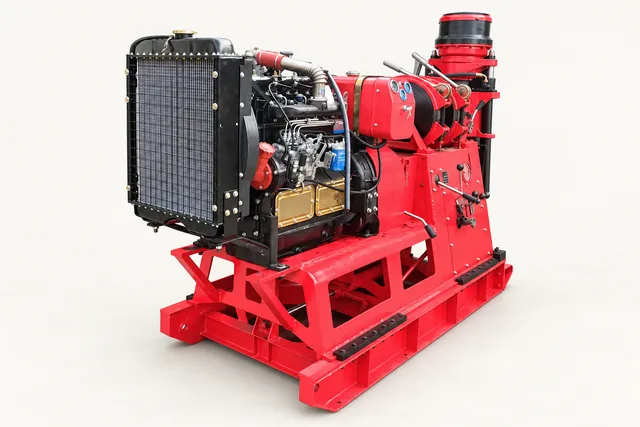
The XY-2B supplier table pairs different depths with different rod diameters. Preserve each pairing when comparing an offer.
Review specifications and evidence →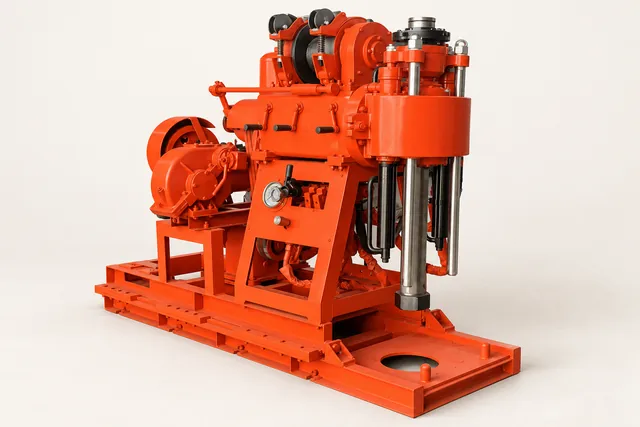
The GK-200 supplier pages differ on weight, speeds and lifting capacity. Request a current signed configuration sheet rather than choosing the more favourable value.
Review specifications and evidence →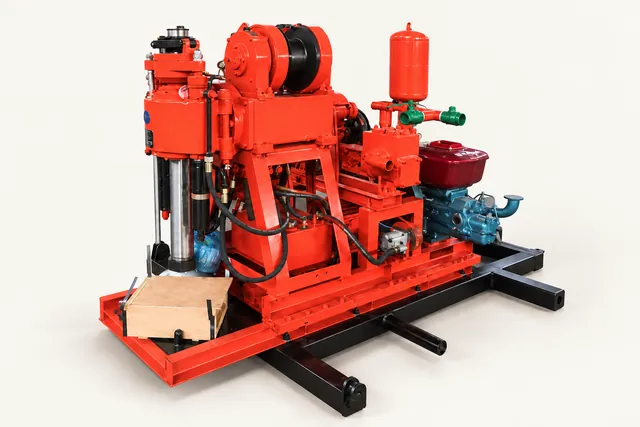
The ST-50 sampling listing does not establish a complete NQ / HQ wireline configuration. Confirm the actual sample tools and their interfaces.
Review specifications and evidence →Separate the machine, tooling, auxiliaries, spares and delivery scope. Mark every line included, optional, excluded or unresolved.
Compatibility must be established for the offered tooling chain, including rods, threads, barrel, bit, casing, spindle interface and any wireline retrieval equipment. A similar rod diameter is not sufficient evidence.
Sample recovery depends on ground, tooling and the investigation method as well as equipment. Request configuration evidence and agree the project sampling requirements with the investigation designer; do not treat an equipment depth rating as a sample-quality guarantee.
Reviewed 17 October 2026. General references explain the planning considerations stated above. The supplier listings below support only their own catalogue configurations and are not independent tests. The project brief and comparison questions are RigSpan editorial guidance; final engineering and acceptance requirements remain project-specific.
RigSpan coordinates equipment sourcing with manufacturing partners. Send the brief and identify any existing equipment; request a written configuration and scope before ordering.