How to Choose a Water Well Drilling Rig
Quick answer
Start with the planned borehole and the ground, then compare the drilling method, mounting and supporting equipment. State the required depth together with the hole diameter. Ask the supplier to confirm the proposed configuration against those conditions, rather than treating a model name or headline depth as a complete specification.
Define the well before the machine
Write a short project brief before comparing catalogue entries. Is the equipment for a drilling contractor, an agricultural project or a community water scheme? Will it work at one site or move between jobs? Identify who will design and construct the well, who will operate the rig and what information they already have.
Groundwater conditions vary by location. USGS explains that access to water depends on the local underground conditions. A machine selection discussion should therefore use available borehole records, a geological description or an assessment from the project’s drilling professional; a target depth alone does not establish where a productive aquifer will be found.
Put depth, diameter and ground together
Provide the intended total drilled depth, the drilling diameter and the planned casing size as separate entries. If the hole changes diameter with depth, describe the stages. Mark estimates as estimates. Attach the original borehole design where one exists rather than replacing it with a shorter sales description.
- Depth: give the planned depth range and identify any uncertainty.
- Diameter: distinguish drilling diameter from casing outside diameter.
- Ground: describe known soil and rock layers; say when the sequence is unknown.
- Evidence: include a nearby drilling log, site report or photographs if available.
Read the depth and diameter guide before comparing two different depth classes.
Discuss a drilling method and a package
Ask the supplier to identify the proposed drilling method and list the supporting items needed for that method. Keep the machine, compressor or circulation pump, drill string and tooling together in the discussion. A rig-only quotation does not describe the complete working package.
Do not select air pressure, pump flow or tooling from a generic internet table. Ask for the proposed auxiliary-equipment specification and the reason it matches the planned job. If air drilling and fluid circulation are both offered, confirm which components and changeover arrangements are included. The air and mud rotary comparison explains the questions to ask.
Check the entire route to the work site
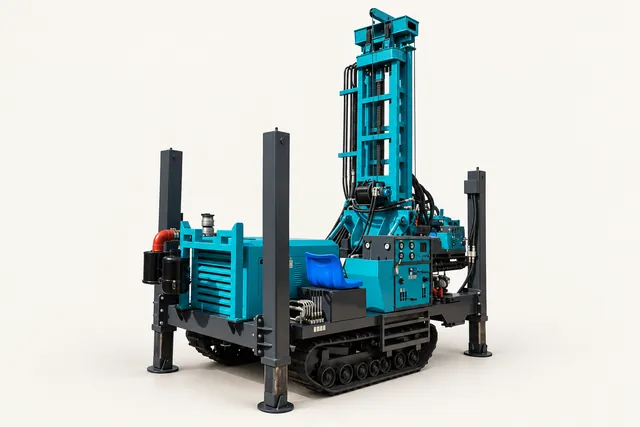
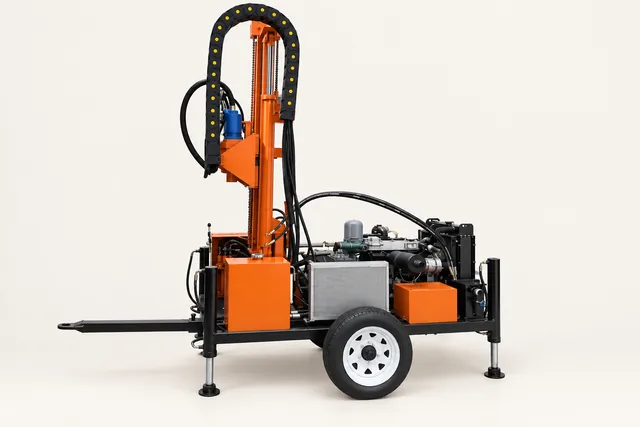
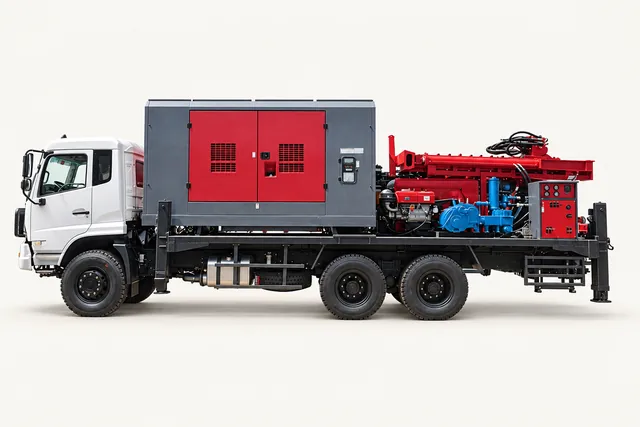
Compare how a crawler, trailer or truck-mounted configuration would be transported, unloaded and positioned at your actual sites. Supply the narrowest access point, overhead restrictions and available working area. Ask for dimensions in both transport and operating configurations.
Request the offered machine’s weight and loading arrangement, plus the space required for stabilizers, rods and support equipment. Do not assume that an off-road appearance establishes suitability for a particular slope or soft ground. Use the mounting comparison to prepare this part of the brief.
Compare written configurations
Shortlist a few equipment layouts, then request a configuration sheet for each. Compare the same borehole requirements and the same included scope. Record unresolved items in the quotation rather than relying on a conversation or a photograph.
Before choosing, identify the supplied tooling, auxiliary equipment, spare parts, documentation and support responsibilities. Ask for exclusions as well as inclusions. Use the quotation comparison guide and project inquiry checklist to keep the discussion specific.
Buyer questions.
Should I choose the largest depth rating I can afford?
A larger headline rating does not resolve diameter, ground, tooling or transport requirements. First ask for a configuration that addresses the planned borehole and supporting package. Compare additional capacity only after the basis of each offer is clear.
What if I do not know the geology?
State that it is unknown and share any nearby borehole records or site information you have. A supplier can identify missing information for the discussion; the project’s drilling professional should establish the ground and well-design assumptions before a final technical commitment.
Sources and scope.
Prepared by RigSpan for equipment procurement discussions. External references support the identified background facts; the selection questions and comparison checklists are RigSpan’s editorial guidance. Catalogue examples do not establish performance for an individual site.
Continue your research.
Put your project into a brief.
Record the depth, diameter, ground conditions and supply-scope questions you want to discuss.
Prepare Project Brief