Crawler vs Trailer Water Well Drilling Rigs
Quick answer
Compare the complete transport and positioning arrangement, not the chassis label alone. A crawler configuration uses a tracked undercarriage; a trailer configuration needs an agreed towing and handling arrangement. Request the actual dimensions, weights, loading method and operating setup for both offers before deciding which layout fits your project.
What should you compare?
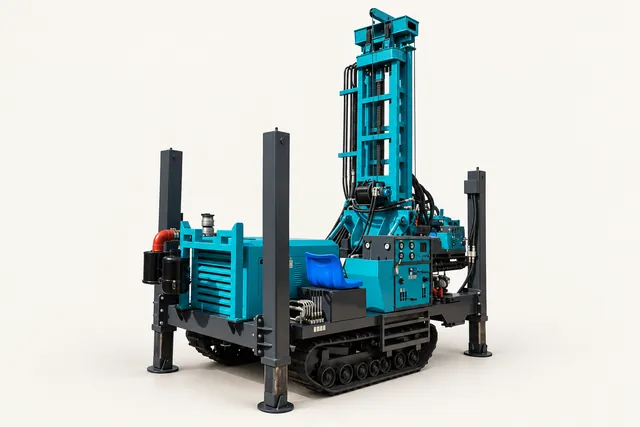
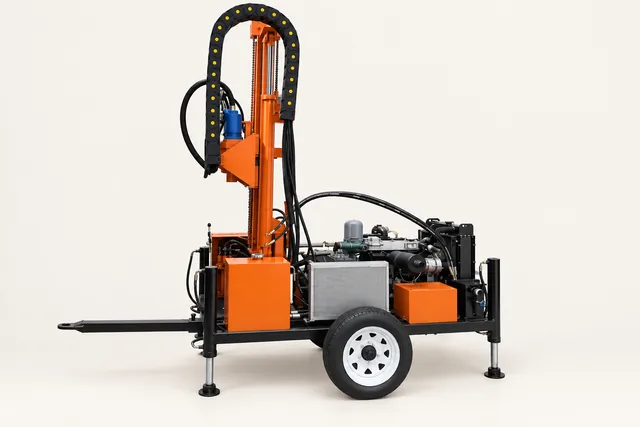
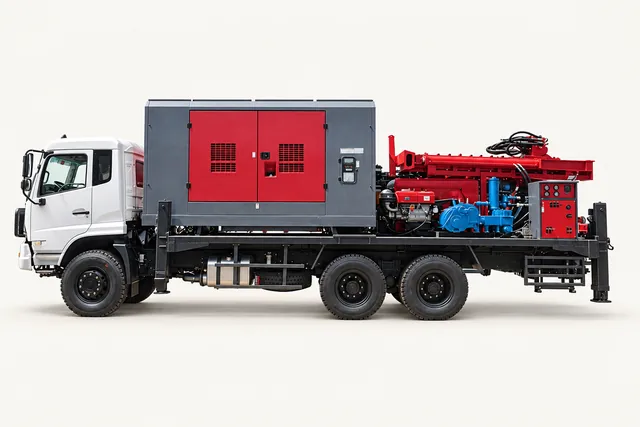
RigSpan’s catalogue includes crawler, trailer and truck-mounted water-well configurations. These are useful starting points for a mounting discussion, not proof that a machine can reach every site. A seller should confirm the offered layout rather than refer only to a representative photograph.
| Question | Crawler offer | Trailer offer |
|---|---|---|
| Transport between sites | Request the carrier, loading and tie-down plan. | Request the towing, coupling and braking arrangement. |
| Working setup | Confirm the deployed footprint and stabilization. | Confirm the deployed footprint and stabilization. |
| Site access | Provide width, height and ground restrictions. | Provide route, turning and positioning restrictions. |
| Supporting equipment | Locate the compressor or pump and tooling. | Locate the compressor or pump and tooling. |
Separate highway transport from positioning
Describe two journeys: delivery to the project area and movement from the unloading point to each borehole. Ask which vehicle, operator and handling equipment are required at each stage. Record who supplies each item.
For a trailer offer, request the towing requirements in writing. For a crawler offer, request the transport dimensions and loading procedure. For a truck-mounted offer, clarify the supplied chassis and the documents the buyer needs to check for its intended market. Do not assume local road approval from the equipment’s mounting type.
Give the supplier a usable site description
A site sketch is often more useful than a request for “a mobile rig.” Show the entry, working position, overhead obstructions, storage area and position of supporting equipment. If access changes seasonally, describe the conditions expected during the project.
- Record the narrowest opening and available clearance.
- Describe the ground surface and known access limitations.
- Show where rods, casing and auxiliary equipment will be handled.
- Ask for the machine’s transport and operating drawings.
Leave slope capability, bearing requirements and safe positioning to the manufacturer’s documentation and the site team. These cannot be established from a catalogue image.
Choose with one common borehole brief
Keep the drilling requirement the same when comparing mounting options. If one offer changes the power unit, tooling or supporting equipment, record that difference separately from the chassis. Otherwise the comparison can mix two different working packages.
Use the selection guide to define the borehole, then use the quotation checklist to compare included scope. The entries below illustrate catalogue layouts to discuss; their listed depth classes are not interchangeable operating guarantees.
Buyer questions.
Does a crawler rig remove the need for a transport vehicle?
Ask the supplier how the particular machine is moved between projects and loaded for transport. Treat site positioning and longer-distance transport as separate requirements; a tracked undercarriage does not itself answer both questions.
Is a trailer-mounted rig always less expensive?
This guide does not establish a universal price ranking. Compare quotations for the same borehole duty, power configuration, auxiliary equipment and delivery scope, then include the handling and transport arrangements your project requires.
Sources and scope.
Prepared by RigSpan for equipment procurement discussions. External references support the identified background facts; the selection questions and comparison checklists are RigSpan’s editorial guidance. Catalogue examples do not establish performance for an individual site.
Continue your research.
Put your project into a brief.
Record the depth, diameter, ground conditions and supply-scope questions you want to discuss.
Prepare Project Brief